The Social Appeal of an Irish Pub NYC Crowd Loves

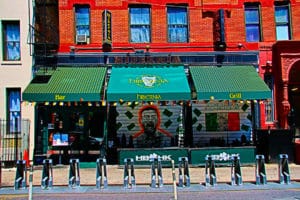
New York has no shortage of places to drink. That has never been the issue. The city is dense with cocktail bars, hotel lounges, wine caves, sports bars, rooftop scenes, tasting rooms, and neighborhood joints that have somehow survived three rent spikes and a pandemic. Yet even in that crowded field, the Irish pub holds a very specific kind of social power. It is not simply a place to order a pint. It is a place people use.
That distinction matters.
People use an Irish pub in NYC for first dates that need an easy exit, for birthdays that start with eight friends and somehow end with twenty-two, for post-work decompression when nobody wants a reservation, for solo dinners that do not feel lonely, and for watching a match with strangers who become familiar by halftime. The appeal is not mysterious if you have spent enough evenings in these rooms. It comes from design, pacing, hospitality, and a particular kind of cultural permission. An Irish pub lets people settle in without demanding a performance.
That may be the strongest reason the format endures in New York. In a city where so many venues ask guests to signal taste, spending power, or insider status, the good Irish pub asks for very little upfront. Walk in, claim a spot, order a drink, and you are in the flow of the room. That ease is social currency, especially in a city where making plans can feel like negotiating a merger.
A room that softens the city
The first thing a strong pub gets right is atmosphere, though that word is often used too loosely. Atmosphere is not just dark wood and framed mirrors. It is how the room handles human behavior. In a well-run Irish pub, the lighting is flattering without being theatrical. The music supports conversation rather than flattening it. The bar itself is long enough, or intelligently shaped enough, to accommodate both regulars and newcomers. Even when the room is full, there is usually some visual sign that says, stay a while.
That matters in New York because so much of the city is hard-edged. Commutes are crowded. Sidewalks are fast. Restaurants can feel transactional. Trend-driven spaces often make guests self-conscious, either because the scene is too loud, too polished, or too calibrated around social media optics. By contrast, the Irish pub tends to reduce friction. People know what to do there. You do not need to decode the menu, wonder if standing at the bar is acceptable, or worry that your group is occupying a table for the wrong amount of time.
There is also a subtle architectural benefit to pubs that many operators in other categories miss. These spaces often break the room into layers. You might have stools at the bar, a few high tops near the front windows, deeper tables in the back, maybe a snugger corner for smaller groups. The result is social flexibility. A couple can have a quiet pint without feeling trapped inside someone else’s birthday party, while a larger crowd can gather without taking over the entire room. Good social spaces are rarely one-note. They offer gradations.
In practice, that means an Irish pub NYC residents return to often feels familiar before it feels exciting. That is not faint praise. In hospitality, familiarity is one of the hardest sensations to build well. It depends on hundreds of decisions that guests may never consciously notice, from the spacing between tables to the volume of the television during a major game.
Why conversation works better there
The social appeal of a pub is not only about who is in the room. It is also about what the room allows people to do. Conversation in an Irish pub tends to be easier because the venue does not overprogram the experience. There is enough activity to keep energy up, but usually not so much that every interaction has to compete with the environment.
That balance is rare. Cocktail bars often excel at craft and fail at comfort. Sports bars can generate great communal energy but become difficult for sustained conversation, especially when every screen is tuned to a different emotional temperature. Restaurants ask people to conform to a meal structure, which can be ideal for some gatherings and restrictive for others. The pub sits in a useful middle ground. You can stop in for one drink and leave after forty minutes, or stay for three hours, add food midway through, and let the night evolve.
I have seen this play out repeatedly in New York social life. A planned dinner for six falls apart because two people are late, one person is still downtown, and another suddenly wants to bring a visiting cousin from Dublin. A reservation-based place turns that into a problem. A good pub turns it into a normal Tuesday. The social ease is built into the model.
It also helps that pubs invite mixed attention. People can talk seriously, half-watch a match, comment on the song coming on, order another round, and resume the original conversation without it feeling fragmented. That is closer to how many people actually socialize than the idealized, uninterrupted dinner-table exchange. Real nights have interruptions. The best rooms absorb them.
The democratic pull of the bar itself
There is a reason the physical bar remains the heart of the room in most successful pubs. It is one of the few truly democratic pieces of social furniture left in urban life. At the bar, a solo guest, a neighborhood regular, a finance team unwinding after work, and a tourist with a folded city map can all coexist within a few feet of one another. That kind of contact does not guarantee connection, but it creates the possibility of it.
New York often separates people by budget, profession, neighborhood, and social circle. The pub counter cuts across some of that. Not entirely, of course. No bar in Manhattan or Brooklyn exists outside the city’s realities of price and geography. But compared with more curated nightlife spaces, the pub remains relatively porous. You can enter with no script.
That porosity is part of what people mean, often without saying it directly, when they talk about a place having “good energy.” Good energy usually means the room https://andyiwia566.nexorafield.com/posts/irish-pub-nyc-spots-for-friendly-service-and-classic-ambiance feels alive but not exclusionary. You hear snippets of conversation. A bartender remembers one guest’s usual order and helps another decide between a stout and a red ale. Someone shares the score update from another game. A table of coworkers invites one extra person to join because the room has made expansion feel natural rather than awkward.
A lot of this depends on bartending style. In the best Irish pubs, service is efficient but not rushed, warm without becoming overfamiliar. There is an ease to the interaction. Bartenders often act as social conductors, keeping regulars anchored while making first-timers feel competent in the space. That role is easy to underestimate. A room can have beautiful interiors and a solid beer list, then still fail socially because the tone behind the bar is indifferent or chaotic.
Comfort food does more social work than people admit
Food matters more to the pub experience than many operators in other categories realize. It is not only about quality, though quality certainly matters. It is about what certain foods do to a room. A menu with shepherd’s pie, fish and chips, curry fries, a strong burger, decent soup, and reliable late-night snacks changes how long people stay and what kinds of plans a group can make on the fly.
Shared food softens indecision. If a group is not ready for a formal dinner, pub food buys time. If someone arrives hungry after work while others only want drinks, the menu can absorb that mismatch. If a date is going well, ordering another round and splitting something hot extends the evening without overcommitting it. These are small social mechanics, but they matter.
There is also the question of emotional familiarity. Pub food, when done well, is grounding. New York diners often spend their week navigating expensive, highly specific, sometimes self-serious menus. There is relief in ordering something recognizable and satisfying. That does not mean pubs need to be old-fashioned or unimaginative. Some of the better kitchens now update classics with more attention to sourcing, technique, and seasonal variation. Still, the emotional function stays the same. The food tells guests they can relax.
A cold night in February makes that especially clear. Outside, the city can feel punishing, all wind tunnel corners and damp gloves. Inside a busy pub, with steam rising off a plate and pints lining the bar, the room feels restorative in a way that is more social than merely physical. Warmth changes how people speak, how long they linger, how willing they are to open up.
Ritual, repetition, and the making of regulars
The social life of a pub is built over time, not just on any given night. Regularity is one of its hidden strengths. People return on the same weeknights, after the same shift patterns, before or after the same neighborhood routines. Over months and years, that rhythm creates a low-pressure community.
This is where the pub differs sharply from destination nightlife. Trend-led venues may be fun at peak moments, but they often lack repeatability. They ask for a certain mood, a certain outfit, sometimes a certain budget. A pub asks for a habit. Habits create belonging.
Belonging in New York is no small thing. The city can be thrilling, but it can also be socially dislocating. Friends move to different boroughs, jobs consume evenings, and many adults find that spontaneous connection gets harder with age. The neighborhood pub can serve as an antidote, not in a sentimental way, but in a practical one. It gives people a place to be recognized without needing a formal invitation.
Recognition can be modest. The bartender nods when you walk in. The server remembers that you like mustard with the pie. Another regular asks whether your team ever fixed that impossible bullpen. None of this is dramatic, yet it accumulates. A social world does not always begin with intimacy. Sometimes it begins with repetition.
The strongest Irish pub NYC communities tend to emerge exactly this way. Not through branding copy about community, but through the ordinary recurrence of faces, rituals, and small courtesies. Trivia nights, live music, early soccer mornings, holiday gatherings, and post-parade crowds all help, but the real glue is consistency between events.
A place for groups, dates, tourists, and loners, all at once
Very few hospitality formats serve so many social use cases without feeling diluted. A pub can host a family lunch, an after-work meet-up, a wake, a reunion, a tourist detour, and a solo pint in the same week, often in the same room, without betraying its identity. That range is one reason the model remains resilient.
Each group finds a slightly different value in the space. Office workers appreciate the low barrier to entry. Nobody needs to study a menu in advance or worry about a strict seating window. Dates benefit from the balance of privacy and liveliness. There is enough around you to cover first-date nerves, but not so much noise that conversation dies. Tourists get a recognizable point of cultural entry, especially if they are looking for warmth over novelty. Solo guests can be alone without feeling isolated, which is a distinct skill in hospitality and one many venues never master.
That broad usefulness is not accidental. It comes from avoiding extremes. The pub is not too formal, not too trendy, not too precious, not too anonymous. In a city full of concept-driven businesses, that middle register is powerful.
There is a lesson here for operators. Versatility does not mean trying to be everything. It means understanding the core social promise of the room and protecting it. Once a pub becomes too loud, too scene-oriented, or too tightly optimized for one customer segment, it often loses the very quality that made it widely loved.
What the best ones get right
Not every Irish pub earns loyalty. Some lean too hard on cliché. Others treat the category as a costume, with generic decor, indifferent food, and service that feels interchangeable with any tourist-heavy bar district. The social appeal people talk about is not automatic. It has to be maintained.
The strongest examples usually share a few practical traits:
- A bar staff that can be brisk without being cold
- Enough seating variety to accommodate both solo guests and larger groups
- A drink program that covers staples well, especially beer and whiskey, without trying too hard
- Food that arrives consistently and holds up during busy periods
- Sound, lighting, and television management that support the room rather than dominate it
Those points may seem basic, but basic is where many places fail. During a packed Friday service, social appeal depends less on branding and more on whether guests can hear each other, find a place to stand, get a second round in reasonable time, and order food without friction. A room that handles those moments gracefully will be forgiven a lot. A room that mishandles them will not be saved by polished woodwork.
The emotional draw of cultural identity
Part of the Irish pub’s appeal, especially in New York, is that it carries a cultural identity while remaining broadly legible. You do not need to be Irish, or Irish American, to feel comfortable there. At the same time, many pubs serve as real cultural anchors for diaspora communities, neighborhood traditions, and seasonal rituals tied to sport, music, and holidays.
That dual function is difficult to replicate. Some themed venues become exclusionary or shallow. The better Irish pubs avoid both traps. They feel specific without becoming inaccessible. Heritage shows up in the music, the hospitality style, the drinks, the cadence of the room, and the community around it, rather than as a loud branding exercise.
On days like St. Patrick’s Day, or during major matches, that identity becomes more visible and celebratory. But even on quiet afternoons, it shapes the room. There is a difference between a bar that borrows Irish signals and a pub that has absorbed them into lived routine. Guests can sense that difference quickly, even if they cannot articulate it.
For many New Yorkers, that cultural steadiness is appealing in itself. The city changes fast. Businesses come and go. Neighborhoods transform. A pub that keeps its character through those shifts offers something rare: continuity. Not nostalgia for its own sake, but continuity that feels usable in the present.
Why affordability still matters
Social life in New York is expensive, and people feel that pressure sharply. The places that become regular gathering spots are not always the most glamorous. They are the ones people can return to without treating every outing like an event.
That is another reason the Irish pub remains socially relevant. Even as prices rise across the city, pubs often preserve some version of value, whether through pints that are still competitively priced, generous pours, filling meals, happy hour traffic, or a general sense that you can have a complete evening without financial regret. Value, in this context, is not just about low prices. It is about proportion. Guests want to feel the experience was worth the cost.
A space that supports an unplanned second round, a plate of food, and an extra hour of conversation without making everyone glance nervously at the check has a major social advantage. It stays in circulation. Friends suggest it again. Colleagues default to it. Locals bring out-of-town visitors there because it feels both reliable and distinctly New York.
That last point is easy to overlook. Visitors often want a version of New York that feels real but manageable. The right pub offers exactly that. It gives them a social cross-section of the city without throwing them into a velvet-rope ecosystem they did not ask for.
The pub as social infrastructure
The phrase may sound grand for a place serving pints and burgers, but it fits. Some venues function as social infrastructure. They support repeated, low-stakes interaction among people who might otherwise remain separate. They host rituals, absorb overflow from daily life, and give neighborhoods an informal living room. The Irish pub has long excelled at this role.
In New York, where housing is tight and many apartments are too small for entertaining, that role is even more important. People need third places, environments that are neither work nor home, where social life can unfold with some freedom. The pub fills that need better than many more fashionable concepts because it does not overdefine the terms of participation.
You can celebrate there. You can grieve there. You can watch, talk, flirt, eat, hide out, or simply pass an hour. Few places allow that many modes of presence while still feeling coherent.
That coherence is the real social appeal of an Irish pub NYC crowds keep returning to. It lies in warmth without fuss, familiarity without boredom, and openness without chaos. In a city that often asks people to move faster, spend more, and curate themselves constantly, the pub offers a quieter proposition. Come in as you are, stay as long as feels right, and let the room do some of the work.
Hibernia Bar
401 W 50th St
New York, NY 10019, United States
Phone: +1 212-969-9703
FAQ About Irish Pub NYC
What is the best Irish pub in NYC?
The best choice depends on your location and preferred atmosphere. Hibernia Bar is a neighborhood Irish pub in Hell's Kitchen offering Guinness, Irish whiskey, pub food, and sports viewing.
Where do Irish people go in NYC?
New York's Irish community gathers in many neighborhoods and venues. Hibernia Bar welcomes Irish expats, local residents, and visitors at 401 W 50th St, just off Ninth Avenue.
Where can I watch GAA games in New York?
Hibernia Bar lists GAA among the sports it shows. Call +1 212-969-9703 to confirm coverage and opening times for a particular match before visiting.
What is the difference between a bar and a sports bar?
A sports bar emphasizes televised games and a shared viewing atmosphere. Hibernia combines sports viewing with the food, drinks, and hospitality of a neighborhood Irish pub.